
Texas summers are brutal on roofing systems. Long periods of high temperatures, intense UV exposure, and sudden storms all combine to wear down materials faster than many homeowners expect. In DFW, heat-related roof damage is one of the biggest causes of premature roof failure. Knowing the signs of a roof failing under summer heat can help homeowners catch issues early before they turn into expensive repairs or full replacements. K & L Construction Solutions helps homeowners across Fort Worth and Arlington identify heat damage and protect their homes before problems spread.
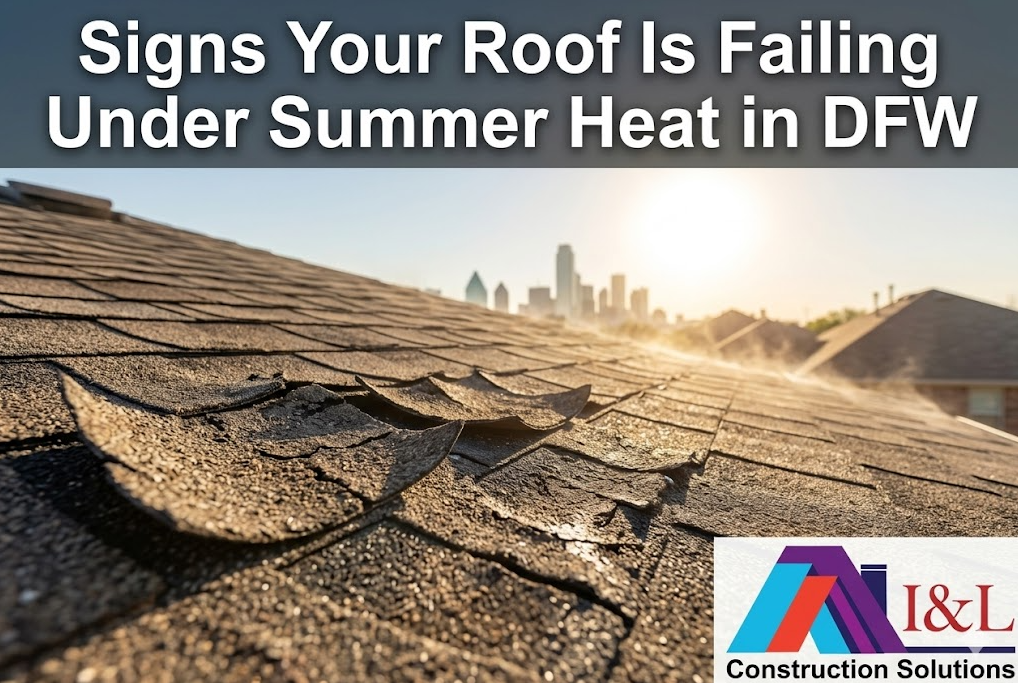
One of the first signs of heat damage is curling shingles. Extreme temperatures cause roofing materials to expand during the day and contract at night. Over time, this repeated movement weakens shingles and causes edges to curl upward or buckle.
Curling shingles are more than a cosmetic issue—they leave the roof vulnerable to:
If only a few shingles are affected, repairs may be possible. But widespread curling usually indicates the roof is nearing the end of its lifespan.
Asphalt shingles are coated with protective granules designed to shield the roof from sunlight and weather. During intense DFW summers, those granules can begin breaking down and washing away.
Check gutters and downspouts for:
Granule loss weakens shingles and speeds up roof deterioration. Homeowners noticing these signs should schedule an inspection through K & L’s roofing contractor services.
Sometimes the first warning sign appears inside the home. If cooling costs suddenly rise or rooms feel hotter than normal, the roof may no longer be insulating effectively.
Heat-related roofing issues can lead to:
According to the U.S. Department of Energy, poor roof ventilation and heat buildup can significantly increase cooling costs in hot climates (Energy.gov).
Improving ventilation can help extend roof lifespan while making the home more comfortable. K & L evaluates airflow systems through their attic ventilation services.
DFW heat doesn’t just warp shingles—it dries them out. Over time, constant UV exposure removes the oils that keep shingles flexible. Once that happens, shingles become brittle and crack more easily during storms or even normal temperature changes.
Common signs include:
Brittle shingles are especially vulnerable during hail season, when impact damage can quickly turn into leaks.
A roof should appear straight and even from the outside. If sections begin sagging or feel soft under pressure, heat and moisture may already be damaging the underlying structure.
This often happens when:
Sagging areas should never be ignored, as they may indicate structural issues beneath the roofing material.
Flashing protects areas around chimneys, vents, skylights, and roof valleys. Summer heat causes flashing materials and sealants to expand, crack, or loosen over time.
Signs of flashing failure include:
Because flashing protects some of the roof’s most vulnerable areas, even small failures can quickly lead to leaks.
Heat and moisture often work together in Texas homes. Poor ventilation traps hot air in the attic, which increases condensation and creates ideal conditions for mold growth.
Homeowners should watch for:
These signs often point to ventilation or roofing problems that need immediate attention.
“We noticed our energy bills climbing and found out the roof ventilation was failing. K & L fixed the issue before major damage happened.” — Chris M.
“Our shingles were curling badly after years of Texas heat. K & L helped us replace the roof before leaks started.” — Angela R.
The signs of a roof failing under summer heat often start small, but they rarely stay that way. Catching problems early can prevent leaks, reduce repair costs, and extend the life of the entire roofing system.
K & L Construction Solutions helps DFW homeowners identify heat-related damage and recommend practical solutions that protect homes through the toughest Texas summers. A simple inspection today can prevent major repairs tomorrow.


Copyright © 2026 K&L Construction Solutions
