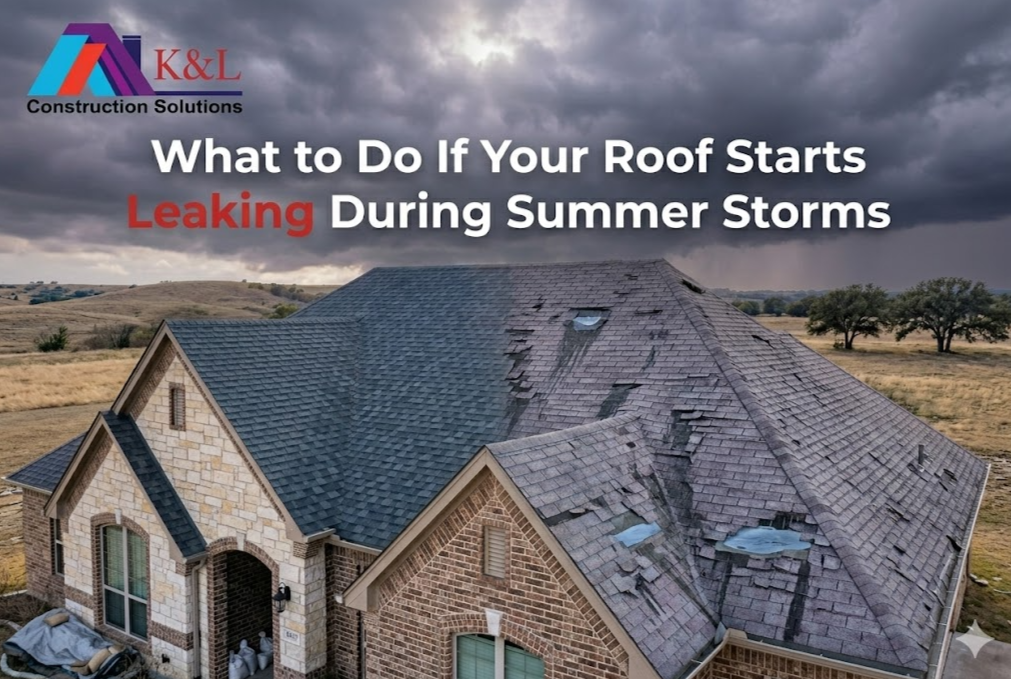
Summer storms in Texas can hit hard and fast. Heavy rain, hail, strong winds, and lightning often expose roofing problems that homeowners didn’t know existed. When a roof leaking during summer storms suddenly appears, acting quickly can prevent serious water damage and expensive repairs. K & L Construction Solutions helps DFW homeowners respond fast, minimize damage, and restore their roofs before small leaks become major problems.
The first priority is protecting your home’s interior. Even a small roof leak can damage drywall, insulation, flooring, furniture, and electrical systems if water continues spreading.
As soon as you notice water coming in:
Taking quick action limits interior damage while you wait for professional help.
When dealing with a roof leaking during summer storms, many homeowners try climbing onto the roof immediately. That can be dangerous, especially during wet or windy conditions.
Instead:
Remember that water often travels before dripping indoors, so the leak’s visible location may not match the actual roof damage.
If weather conditions are unsafe, wait for professionals to inspect the roof properly.
Texas summer storms expose weak points in aging roofing systems. Some of the most common causes include:
K & L helps homeowners identify these issues through their roofing contractor services before the damage spreads further.
While permanent repairs require professional work, temporary measures can reduce water intrusion until repairs begin.
Short-term steps may include:
These steps help minimize moisture damage and reduce the risk of mold growth.
One of the biggest mistakes homeowners make is assuming a minor leak isn’t urgent. Even a slow drip can cause major damage over time.
Water intrusion can lead to:
According to the Environmental Protection Agency, mold can begin growing within 24–48 hours after water exposure if moisture is not removed properly (EPA).
The sooner repairs begin, the lower the risk of long-term structural damage.
Summer storms in DFW often cause damage covered by homeowners insurance. Proper documentation is important if you plan to file a claim.
Helpful steps include:
K & L works with homeowners throughout the claims process and provides detailed inspection reports through their roof insurance claims services.
Not all storm damage is obvious from the ground. A professional inspection helps identify hidden issues before they become larger problems.
Roofing experts check for:
K & L provides detailed evaluations and repair recommendations tailored to Texas weather conditions.
Once repairs are completed, preventative maintenance helps reduce the risk of future leaks.
Important maintenance steps include:
These proactive steps help extend roof lifespan and improve performance during storm season.
“Our roof started leaking during a storm, and K & L responded quickly. They stopped the damage before it got worse.” — Daniel P.
“The inspection found hail damage we never noticed. K & L handled everything from repairs to insurance.” — Melissa R.
A roof leaking during summer storms is never something homeowners should ignore. What starts as a minor drip can quickly turn into mold, structural damage, and expensive repairs if left untreated.
K & L Construction Solutions helps DFW homeowners respond quickly with inspections, emergency repairs, and long-term roofing solutions built for Texas weather. Fast action today can save thousands tomorrow.


Copyright © 2026 K&L Construction Solutions