
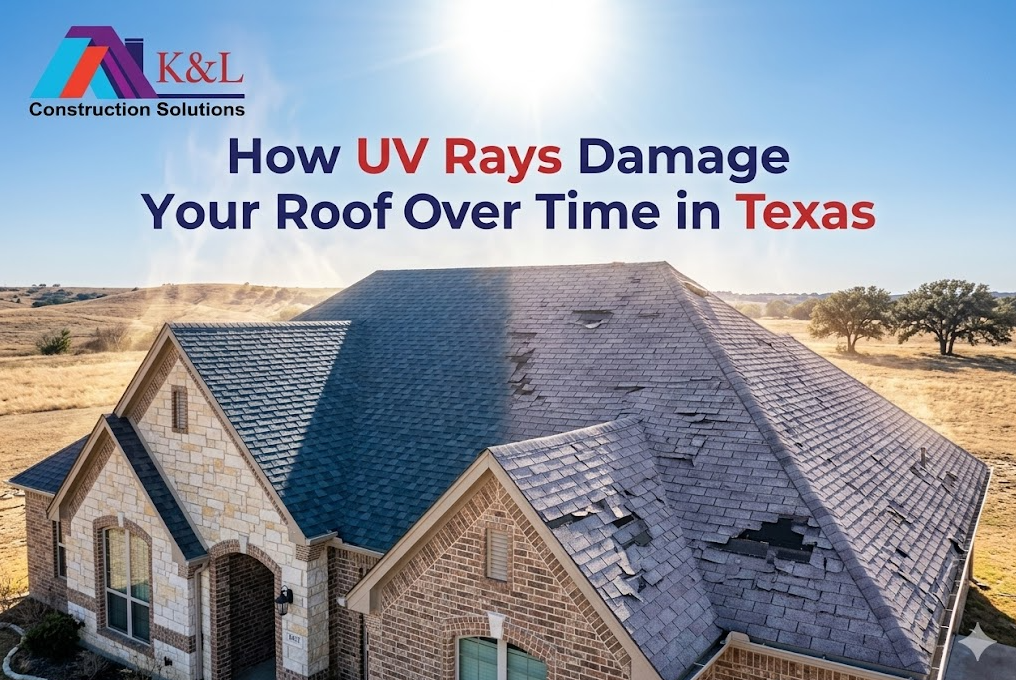
Texas roofs face more than storms and heavy rain. Day after day, intense sunlight and extreme heat slowly break down roofing materials, even when no visible damage is present. Over time, UV rays damage your roof by weakening shingles, drying out protective materials, and reducing overall lifespan. In DFW, where summer temperatures regularly exceed 100°F, this process happens faster than many homeowners realize. K & L Construction Solutions helps homeowners identify early signs of sun damage and protect their roofs before repairs become more expensive.
Ultraviolet (UV) rays are a form of radiation produced by the sun. While roofing materials are designed to handle outdoor exposure, constant UV exposure slowly weakens them over time.
On asphalt shingles, UV rays break down the oils that keep shingles flexible. As those oils dry out, shingles become brittle and more likely to crack or curl. This process accelerates during long Texas summers when roofs experience extreme heat for weeks at a time.
Common effects include:
The damage often develops gradually, making it easy to miss until major problems appear.
One of the first signs that UV rays damage your roof is granule loss. Asphalt shingles are coated with granules that help reflect sunlight and shield the roof from UV exposure.
As shingles age, these granules loosen and wash into gutters during rainstorms. Once the protective layer wears away, the underlying material absorbs more heat and deteriorates faster.
Homeowners may notice:
Granule loss doesn’t just affect appearance—it significantly reduces the roof’s ability to protect the home.
UV exposure alone is damaging, but combined with Texas heat, the impact becomes even more severe. Roof surfaces in DFW can reach temperatures of 150°F or higher during peak summer afternoons.
This creates a cycle where:
According to the U.S. Department of Energy, reflective roofing materials can help reduce roof surface temperatures and limit heat-related deterioration (Energy.gov).
Sun damage doesn’t always create immediate leaks, but there are warning signs homeowners should watch for:
These symptoms often indicate that the roof’s protective layer is beginning to fail.
Poor attic ventilation makes UV and heat damage worse. When hot air becomes trapped beneath the roof, temperatures rise even higher, putting additional stress on shingles and decking.
Proper ventilation helps by:
K & L helps homeowners improve airflow through their attic ventilation services, helping roofs perform better during Texas summers.
Not all roofing materials respond to sunlight the same way. Some are built specifically to handle extreme climates.
Popular UV-resistant options include:
Choosing the right material can significantly extend roof lifespan in Texas conditions. Homeowners considering upgrades can explore options through K & L’s roof installation services.
Because UV damage develops slowly, regular inspections are one of the best ways to catch problems early. Small cracks or granule loss may not seem serious at first, but they can quickly turn into leaks or structural issues during storm season.
Professional inspections help identify:
K & L provides detailed inspections through their roofing contractor services to help homeowners stay ahead of costly repairs.
“We thought our roof was fine until K & L showed us how much sun damage had built up over the years.” — Robert M.
“After upgrading ventilation and replacing damaged shingles, our home feels cooler and more protected.” — Lisa T.
Texas sunlight may seem harmless day to day, but over time, UV rays damage your roof in ways that can shorten its lifespan and increase repair costs. Taking proactive steps like inspections, ventilation upgrades, and timely repairs helps homeowners avoid larger problems later.
K & L Construction Solutions helps DFW homeowners protect their roofs from extreme heat and UV exposure with professional inspections, repairs, and long-lasting roofing solutions designed for Texas conditions.


Copyright © 2026 K&L Construction Solutions
